Work with me
The Orchid That Was Waiting to Be Seen
I found the first five blooms of this population in September 2017, spotted from a moving vehicle at last light, and have returned each spring since to watch the story unfold.Nikon D810 | ISO-640 | f/3.5 | 1/8000 sec. | 105mm
The Orchid That Was Waiting to Be Seen — secondary
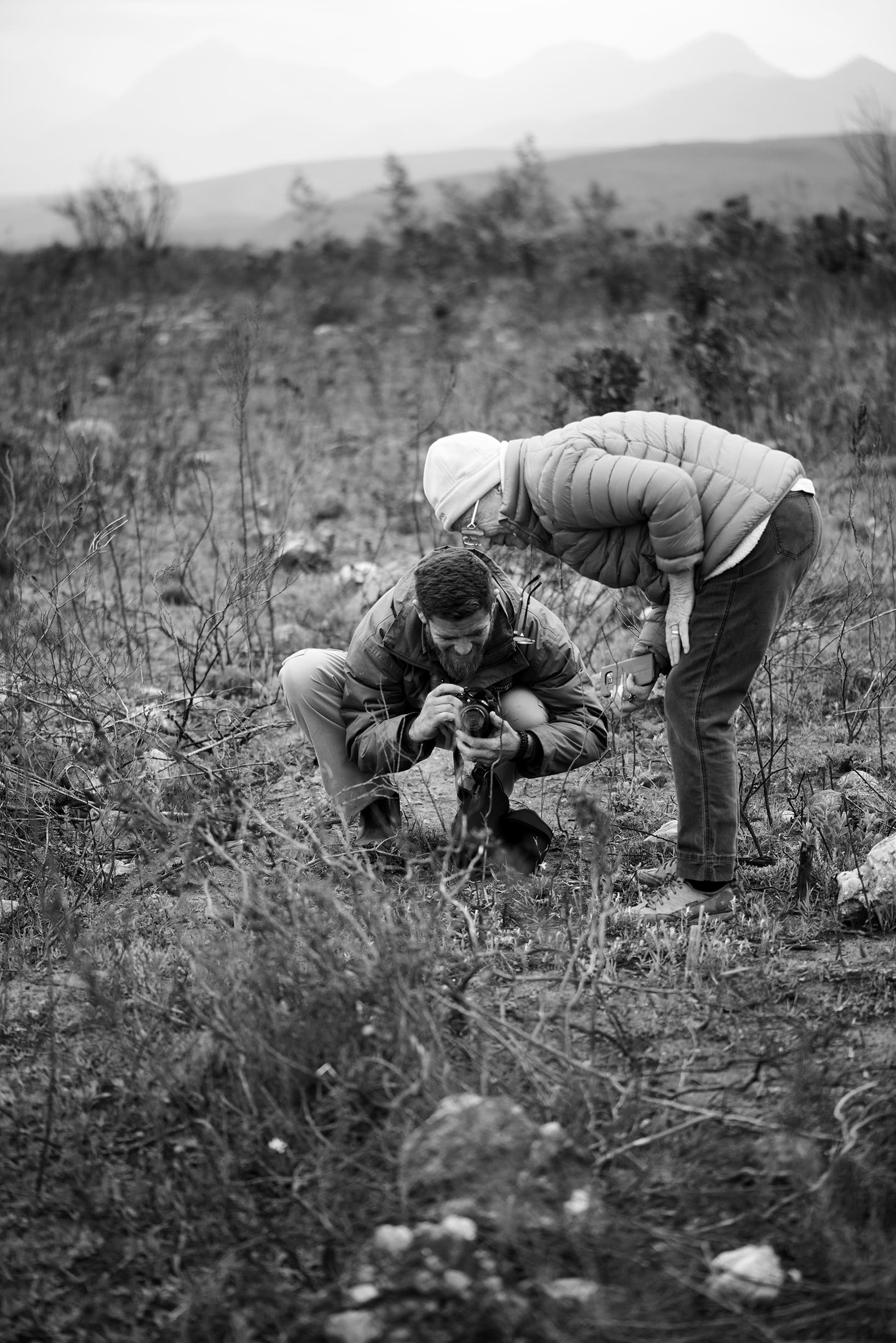
Yvette van Wyk and Gondwana guide Brendan, deep in concentration during the same 2017 plant survey that led to the discovery of Satyrium muticum. Every find, however small, was worth stopping for.Nikon D810 | ISO-500 | f/2.8 | 1/1600 sec. | 105mm

Field Stories | SPECIES RECOVERY | FYNBOS ECOLOGY

The Orchid That Was Waiting to Be Seen

In 2017, during a botanical exploration of Gondwana Game Reserve, its first since the land had recovered from decades as a cultivated pea farm, I found a handful of orchid blooms that would go on to rewrite the conservation story of one of the Southern Cape's rarest plants. What followed became a reminder of the power of observation in conservation science.

As the last light settled across the fynbos-covered hills of Gondwana Game Reserve, I noticed five white flowers from the back of a moving game viewer, on our way back to the lodge after a day in the field. 

Something about their shape was instantly familiar, five years spent studying South Africa's ground orchids for a personal project called Ephemeral had taught me to recognise an orchid almost anywhere. 

We stopped immediately. 

I climbed down and photographed everything I could before the light disappeared completely, then spent that evening working through my own reference books, certain of what I had found.

Orchid Research Site - Photograph by Raquel de Castro Maia
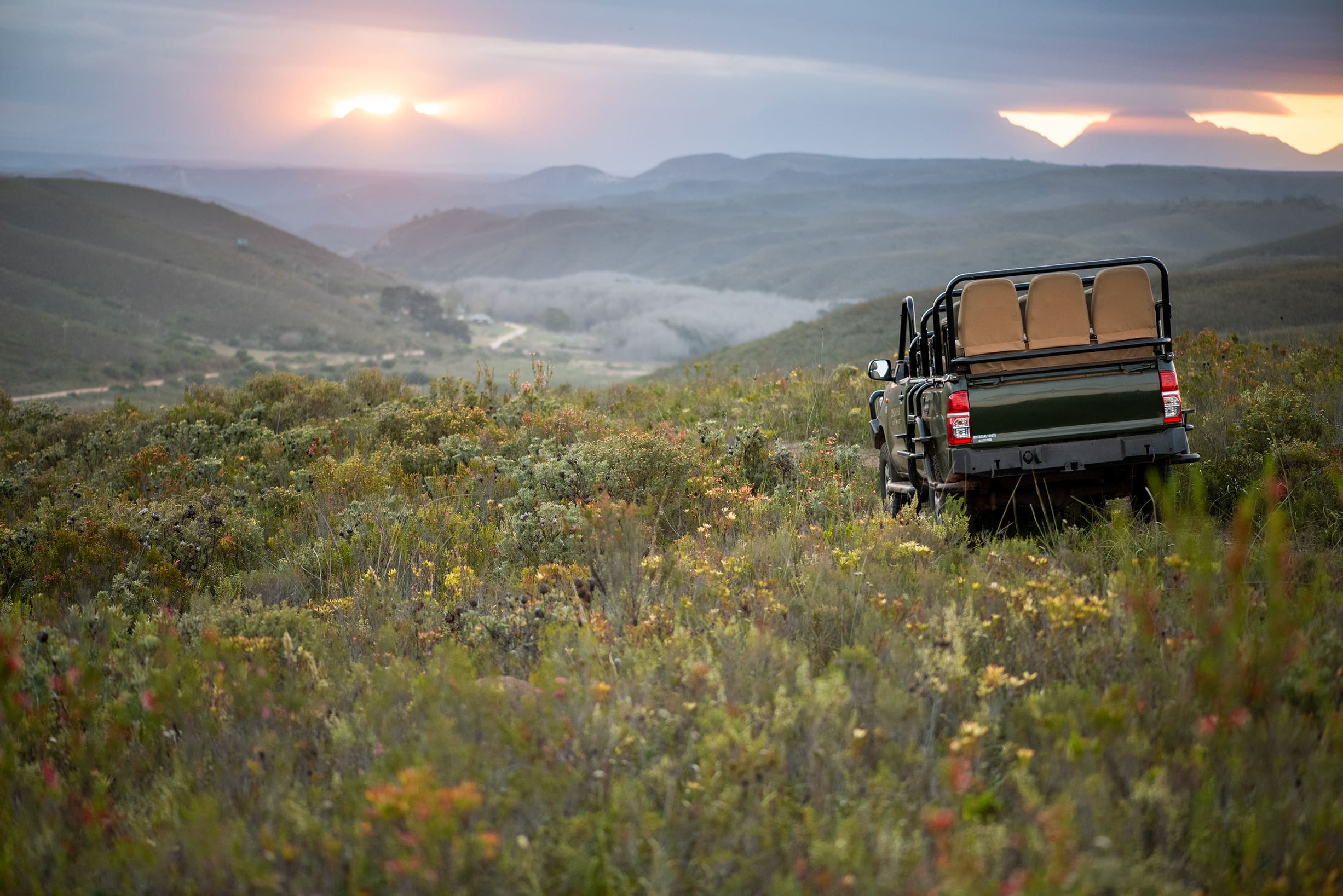
This is one of the research sites, and the vehicle stops here for a reason. Fynbos is too delicate, and too small, to understand from a seat. To really see it, you have to get out and walk.Nikon D810 | ISO-1000 | f/2.8 | 1/250 sec. | 105mm
They were easy to miss, not because they hid among dense vegetation, but because there was almost none to hide among. 


The blooms grew right at the edge of the road, in a patch of disturbed, sparsely vegetated ground. 


Flat, fleshy leaves lay pressed against the earth while a sturdy flowering stem emerged from their centre, carrying delicate blossoms arranged in a loose spiral.


The plants seemed almost out of place, as though they had surfaced briefly from another world before disappearing again into the landscape.

Satyrium muticum - Photograph by Raquel de Castro Maia
The full plant, base to bloom: a fleshy leaf pressed flat against the soil, a slender stem rising from it, and a loose spiral of pink and white flowers at the top, the same features that make Satyrium muticum recognisable in the field.
Satyrium muticum - Photograph by Raquel de Castro Maia
No two flowering stems look quite the same. Satyrium muticum blooms can range from pure white to deep pink, sometimes within the same small population.
Satyrium muticum - Photograph by Raquel de Castro Maia
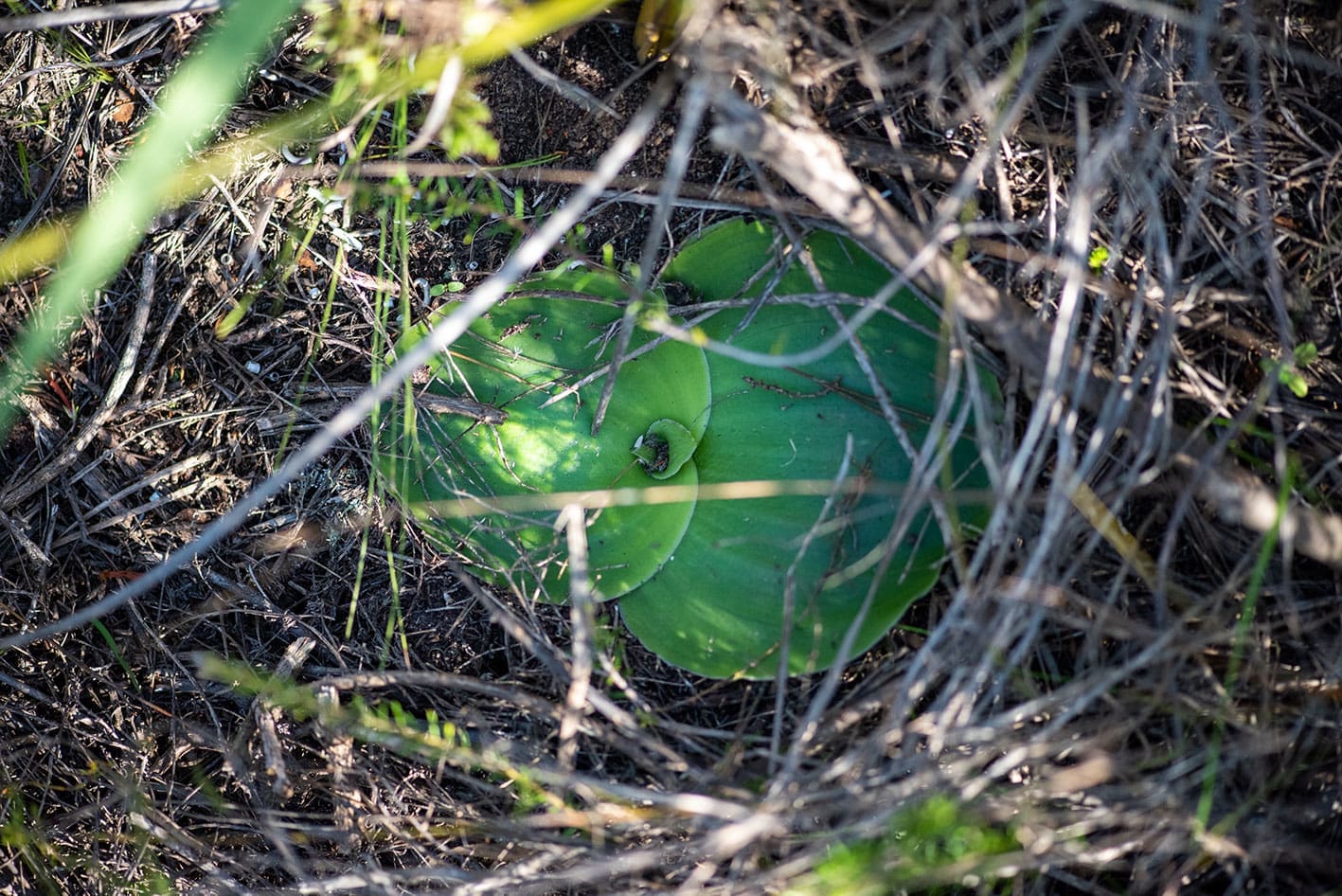
For eleven months of the year, this is all there is to see, a single leaf pressed flat against the ground. It could belong to any number of orchids or Satyrium species. Only the flower, when it finally appears, gives away which one it actually is.
The outing was part of a botanical exploration I had arranged with my friend Yvette van Wyk, a botanist and curator at the George Herbarium, the reserve's first proper look at its own plant life since Gondwana's original environmental assessment, years earlier, when it was still a working pea farm. The orchid flowers for only a single month a year, and only when conditions are right. Yvette did not find it herself, but she confirmed my identification: Satyrium muticum, commonly known as the Sticky Satyre, then classified as Critically Endangered.


The first call I made was to my uncle, Antonio de Castro, a field botanist and taxonomist whose own discoveries have since had a plant species named in his honour. My own love of plants began with him.


But I had found the orchid at the very end of its flowering season, and by the time he could arrange to fly down, the blooms were already gone. He would have to wait a full year to see for himself what I had found.

Nothing in nature can be hurried.

Conservation moves at the pace of the seasons, not the pace of curiosity, and the only way to learn anything from a landscape is to keep watching it, intentionally, for as long as it takes.

Cape Fold Mountains - Photograph by Raquel de Castro Maia
The mountains do not hurry either. Light moves across them at its own pace, on its own schedule, indifferent to whoever happens to be watching.Nikon Z7_2 | ISO-640 | f/5 | 1/2500 sec. | 150mm

The rarity of what we had found was clear from that very first night, a quick check against the Red Data List confirmed Satyrium muticum as Critically Endangered. What we couldn't yet know was how many more plants might be out there, and that question would have to wait for the flowers to return.

Noticing matters.

Botanical records suggested Satyrium muticum survived in only a handful of fragmented populations between Mossel Bay and Riversdale. Fewer than 250 mature plants had been recorded within each known subpopulation, and habitat loss posed an ongoing threat to its future.

On paper, it was a species on the brink. Yet landscapes rarely read the same reports as scientists.

When the flowering season returned the following year, that curiosity turned into real research. I worked alongside the reserve's conservation manager, Jono Berry, and specialist Kevin Koen, who had by then begun developing further study of the species, focusing surveys on habitats that appeared suitable for the orchid. 

My uncle flew down with his wife at last, and we spent an entire afternoon together in torrential rain, counting how many Satyrium muticum plants we could find within a single site. He helped me submit a specimen record to SANBI.

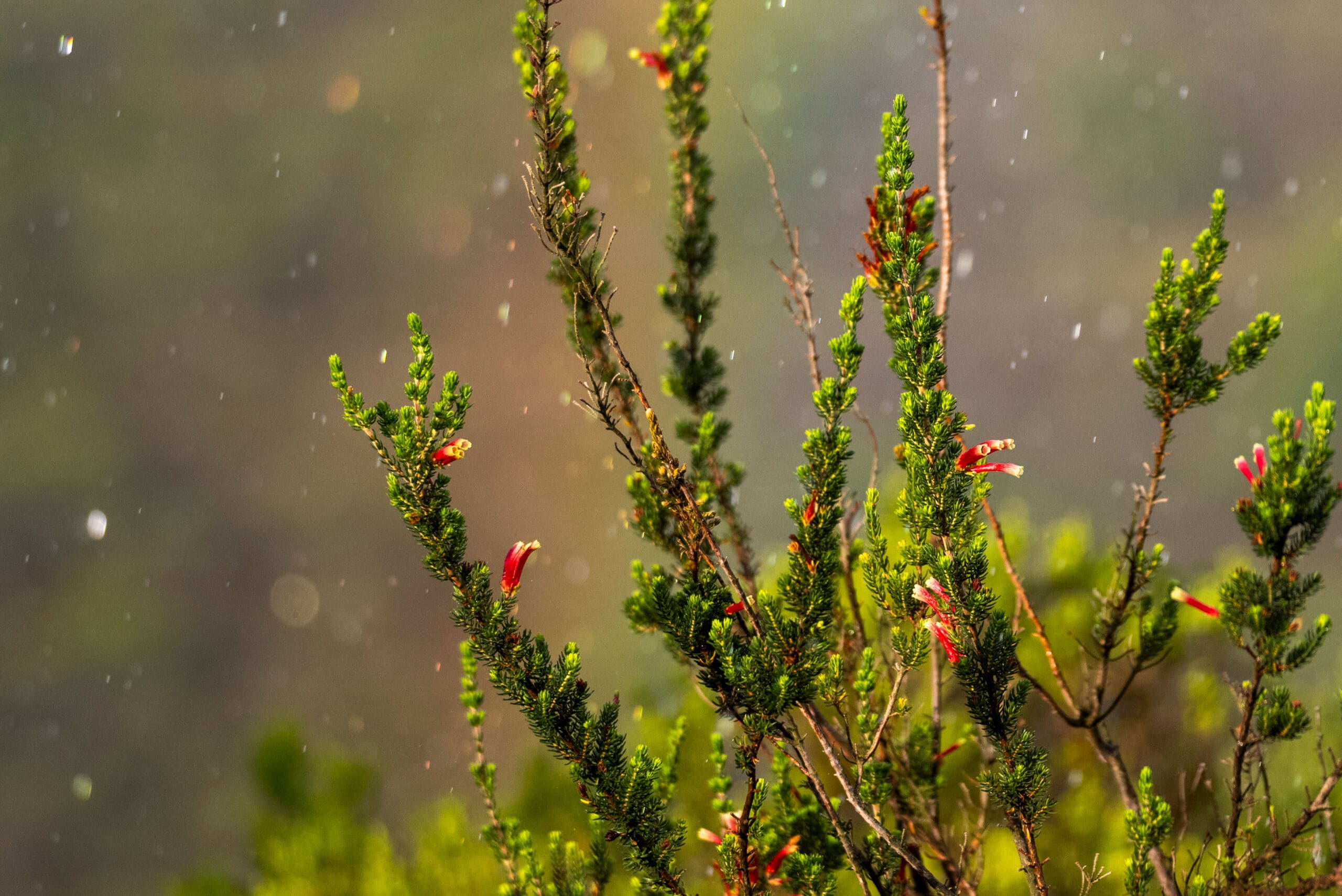
Ericas in the rain - Photograph by Raquel de Castro Maia
Rain moved through as we counted, backlit and briefly golden, before the grey settled back in for the rest of the day.Nikon Z7_2 | ISO-640 | f/5.3 | 1/1600 sec. | 230mm
New populations emerged from the fynbos. Then more. Some numbered well over a thousand plants.


The orchid had not suddenly expanded its range. It had simply remained undiscovered, flowering quietly among the hills while attention was directed elsewhere.

The findings contributed to a reassessment of the species. In 2018, Satyrium muticum was downlisted from Critically Endangered to Endangered, a rare example of a conservation status improving through increased ecological understanding rather than through intervention alone. That first survey also became the starting point for all the botanical research since conducted on the reserve, work that has since documented more than 1,200 plant species across Gondwana.

Cyphia volubilis - Photograph by Raquel de Castro Maia
This is Cyphia volubilis, known locally as baroe, a climbing geophyte that twines up its neighbours for support, its tuber once an important food source in the Western Cape. Like Satyrium muticum, it spends most of the year hidden underground, waiting for the same winter rains to bring it back into flower.
Granny's Bonnet, Disperis capensis - Photograph by Raquel de Castro Maia
Granny's Bonnet (Disperis capensis) offers nothing to the carpenter bees that pollinate it. It simply mimics a Polygala flower closely enough to fool them, a small deception, repeated season after season.
Satyrium pumilum - Photograph by Raquel de Castro Maia
A relative of Satyrium muticum, but with an entirely different strategy. Satyrium pumilum carries its flowers almost at ground level, with no real stem to speak of, and lures its pollinators not with scent or colour, but by smelling like rotting meat.
Spider Orchid, Holothrix burmanniana - Photograph by Raquel de Castro Maia
Commonly called the Spider Orchid (Holothrix burmanniana), its narrow, radiating petals genuinely resemble a spider's legs. It flowers readily after fire, and depends on a single specialised pollinator, a long-proboscid fly built to reach exactly this shape of flower.
Drosera, Sundew - Photograph by Raquel de Castro Maia
Not every neighbour needs good soil to thrive. This Sundew (Drosera sp.) traps and digests insects to make up for what the sandy ground can't provide, supplying as much as half its nitrogen this way.
Trachyandra ciliata - Photograph by Raquel de Castro Maia
Trachyandra ciliata, its white petals striped with pink, blooms and fades within a single day. Even the most fleeting flowers still find someone paying attention.
Stoebe alopecuroides - Photograph by Raquel de Castro Maia
This is Stoebe alopecuroides, known as cat's tail stoebe, its thick white flower spikes reaching up to 15 centimetres long, finger-like and unmistakable once you know what to look for.
Erica coccinea subsp. coccinea - Photograph by Raquel de Castro Maia
Erica coccinea subsp. coccinea. Despite the name, coccinea means scarlet, this Erica can also flower bright yellow. The colour split is not random: yellow and red-flowered plants differ in how they regenerate after fire, when they bloom, and even in the size of their pollen.
Watsonia laccata - Photograph by Raquel de Castro Maia
Watsonia laccata, a small cormous geophyte whose flowers can range from pink to purple to this fiery orange, arranged in a one-sided spike along a slender stem.

But discovering where a species grows is only the beginning of understanding it.

Little was known about the orchid's ecology, particularly how it reproduced. In 2019 and again in 2023, researchers from the University of KwaZulu-Natal visited Gondwana to investigate the plant's pollination biology. Early theories suggested that the orchid might mimic neighbouring flowers, using colour, scent or form to attract pollinators.


What they found was altogether more intriguing.

Monkey beetles were frequent visitors. The beetles crawl into the orchid's flowers, where sticky structures attach packets of pollen to their backs. As they move between plants, they carry the pollen with them, linking scattered populations through an ancient and largely unseen exchange.

Further research explored the orchid's colour spectrum, scent chemistry and nectar production. Unlike many of its relatives, the Sticky Satyre appears to offer little or no nectar reward, raising new questions about the subtle evolutionary relationships that bind plants and insects together.

Such mysteries are woven throughout the natural world. Most remain hidden not because they are inaccessible, but because nobody has yet stopped long enough to look.

The story of Satyrium muticum is not merely about an orchid. It is about observation, about the value of documenting what lives around us before assumptions harden into accepted truths. It is a reminder that conservation is built as much on curiosity as it is on intervention.

Across South Africa's wild landscapes, countless species continue to bloom, migrate, pollinate and persist beyond the edge of our awareness. Some are rare. Some are declining. Others are simply overlooked. 


The Sticky Satyre offers a quiet lesson.

A species can spend decades hidden in plain sight. A landscape can hold far more life than records suggest. And sometimes the future of a species changes not because it was rescued, but because it was finally seen.

Gondwana Fynbos - Photograph by Raquel de Castro Maia
Not every colour in this frame is a flower announcing itself. Some are new growth, some are leaves adapted to survive fire and drought, and some are flowers small enough to miss entirely. This is what 1,200 species looks like from a distance.Nikon Z7_2 | ISO-2000 | f/3.2 | 1/1250 sec. | 105mm
Each spring, the orchid emerges once more from the soil beneath the fynbos. White flowers catch the light. Monkey beetles resume their ancient work. The landscape continues its conversation with itself. The difference is that now, more of us are listening.


That work has never really stopped. Today, I still assist Gondwana's conservation team with plant identifications and help document their ongoing research into the reserve's flora.

Let Me Tell Your Story →

Behind The Story

How did you first recognise the orchid as something significant?

Five years spent studying the Western Cape's ground orchids for a personal project called Ephemeral had taught me what to look for, even at a glance, from a moving vehicle, at last light.

Why did it take another year to learn more about the orchid's population?

We knew the orchid's rarity immediately, on 13 September 2017, the day we found and identified it, when a check against the Red Data List confirmed it as Critically Endangered. What had to wait was the fieldwork itself: Satyrium muticum flowers for only a single month each year, and only when conditions are right, so further surveys to understand the true extent of the population could only begin the following flowering season.

What role did your uncle play in confirming the discovery?

Antonio de Castro, a field botanist and taxonomist in his own right, flew down to see the orchid for himself the following year, and helped me submit a proper specimen record to SANBI.

Do you assist with plant identification and taxonomy on other projects?

Yes. I still work with Gondwana's conservation team on plant identifications, and I'm always interested in projects where careful, patient observation can genuinely shift what's known about a species.

Can images from this story be licensed?

Yes. This usually means editorial use (a magazine or article), campaign use (marketing or advertising), or conservation-communication use (a conservation organisation's own reports or outreach material). Tell me what you need and where it will run.

Species fact files

Fact file

Spider Orchid

Bartholina burmanniana

Genus Bartholina · Orchidaceae

Least Concern

Key facts

  • Its intricately fringed petals are among the most distinctive of any South African orchid.
  • Like many terrestrial orchids it appears only under the right seasonal conditions, flowering briefly before disappearing beneath the soil again.
  • Recorded on Gondwana Private Game Reserve, part of the reserve's ongoing botanical survey work.

Fact file

Sticky Satyr Orchid

Satyrium muticum

Genus Satyrium · Orchidaceae

Endangered

Habitat
Dry to moist lower slopes (up to ~200 m) in fynbos and renosterveld of the Western Cape; only four small, fragmented subpopulations are known
Lifespan
Terrestrial perennial orchid, growing from a tuber

Key facts

  • A range-restricted South African terrestrial orchid, very rare: roughly 2,500 mature individuals remain, with the largest single subpopulation under 200 plants.
  • Unusually for the genus, it lacks the paired nectar spurs typical of most Satyrium species; it is pollinated by monkey beetles that carry its pollen packets on their backs.
  • Threatened by urban expansion, agriculture and forestry, with ongoing habitat loss recorded at three of its four known sites.
  • SANBI Red List: Endangered (assessed 2018), under criteria B1ab(iii,v)+2ab(iii,v); C2a(ii).
RangeWestern Cape, South Africa (highly localised)