Work with me
The Land Remembers
Gondwana's lions have adapted to thriving in Fynbos.Nikon D9 | ISO-400 | f/5 | 1/640 sec. | 150mm
The Land Remembers — secondary
The valleys have always trapped moisture here just like this, the seasonal patterns of Fynbos.Nikon D9 | ISO-400 | f/5 | 1/640 sec. | 150mm

FIELD STORIES | REWILDING | LANDSCAPE RESTORATION

The Land Remembers

Over the past two decades, Gondwana Game Reserve has transformed former agricultural land into a thriving wilderness. Yet the story of rewilding is about more than the return of wildlife. It is about restoring ecological relationships, reconnecting fragmented landscapes and remembering what a place is capable of becoming.

Long before fences, livestock and cultivated fields reshaped the Southern Cape, elephants moved through these valleys. Lions hunted across the foothills. Black rhino browsed among dense thickets. Buffalo followed seasonal pathways carved into the landscape over thousands of years. Across the mountains and lowlands, life moved according to rhythms far older than any map or boundary.

By the early nineteenth century, much of that world had disappeared.

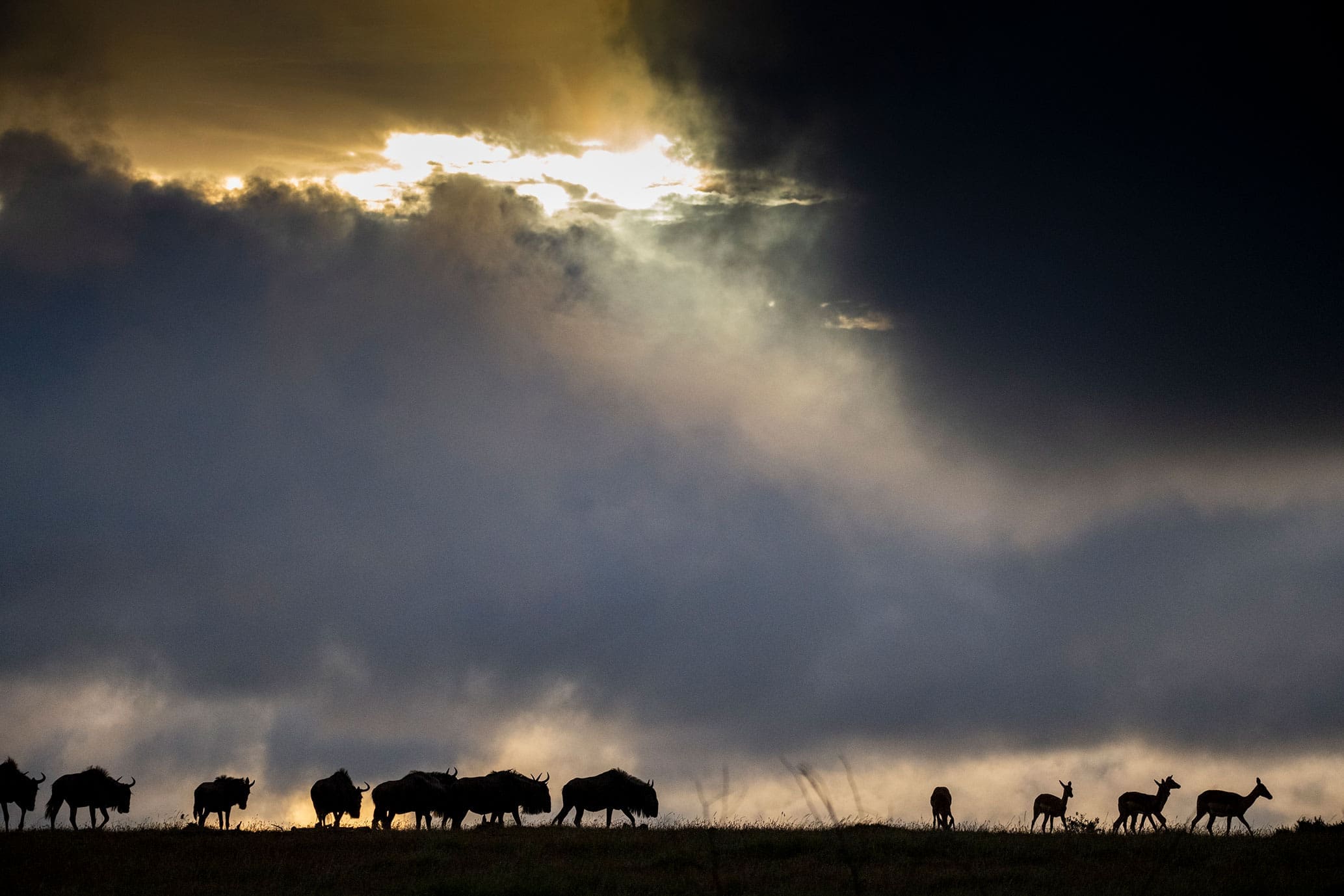
Autumn Sunset, Gondwana - photograph by Raquel de Castro Maia
Storm light swallows the horizon, the herd reduced to silhouette. This is what the nineteenth century did to so much of the Cape's wildlife, not sudden disappearance, but a slow fading into shadow.Nikon DZ7 | ISO-2000 | f/5 | 1/6400 sec. | 180mm

Across the Cape, wildlife populations collapsed under the pressure of hunting, agriculture and expanding human settlement. Ecological relationships that had evolved over millennia were fractured. The land remained, but many of the species that shaped it did not. For generations, this became the accepted story of the region.

Then, slowly, another story began to emerge.

A former livestock farm near Mossel Bay became the foundation for what would eventually become Gondwana Game Reserve. Dairy cattle and merino sheep grazed where wild herbivores once moved freely. Winter cereals grew where elephants had once walked.

Yet beneath every altered landscape lies a memory of wildness.

Over the next two decades, degraded farmland was transformed through one of the Southern Cape's most ambitious rewilding initiatives. Indigenous habitats recovered. Wildlife returned. Ecological processes absent for generations began to re-establish themselves.


Today, lions once again patrol these hills. Elephants move through restored habitats.

Elephant cow and suckling calf - photograph by Raquel de Castro Maia
A calf still suckles at its mother's side, her trunk raised to test the evening air. This is what a restored landscape is ultimately for, not just animals returning, but new generations being born into it.Nikon D810 | ISO-1000 | f/2.8 | 1/1000 sec. | 135mm
Haemanthus coccineus - illustration by Raquel de Castro Maia
Haemanthus coccineus, commonly known as paintbrush lily, its scarlet petals and gold-tipped stamens genuinely look hand-dipped in colour.Nikon D810 | ISO-1250 | f/3.8 | 1/8000 sec. | 105mm
A Bushman's lily.

The fynbos and renosterveld continue their ancient cycles of flowering, pollination and renewal. The return of wildlife is often the most visible measure of conservation success. Yet rewilding is never simply about bringing animals back.

It is about rebuilding relationships.

Between predator and prey.

Between pollinator and flower.

Between seed, soil and rainfall.

Between landscapes that have become isolated from one another.

Because ecosystems do not function in fragments.

In recent years, that understanding has shaped an even larger vision. Through land acquisition, stewardship agreements and conservation partnerships, Gondwana has begun working towards reconnecting protected landscapes across the Southern Cape, land by land, as opportunities allow.


The broader vision is a continuous wilderness stretching well beyond Gondwana's own boundaries, a landscape large enough for ecological processes to once again unfold at scale.

Nouga Valley, Gondwana - Photograph by Raquel de Castro Maia
A single road winds through the Nouga Valley and disappears into the distance, much like the vision itself, one hectare leading to the next, further than any fence line was ever meant to reach.Nikon Z7_2 | ISO-200 | f/2.8 | 1/5000 sec. | 70mm
For wildlife, connectivity means movement.

For plants, it means genetic exchange.
For ecosystems, it means resilience.

The region already contains some of the richest biodiversity on Earth, encompassing three globally recognised biodiversity hotspots. Hidden within these mountains, valleys and catchments are species yet to be discovered, highly specialised pollinators and ancient genetic lineages that have persisted despite centuries of change.

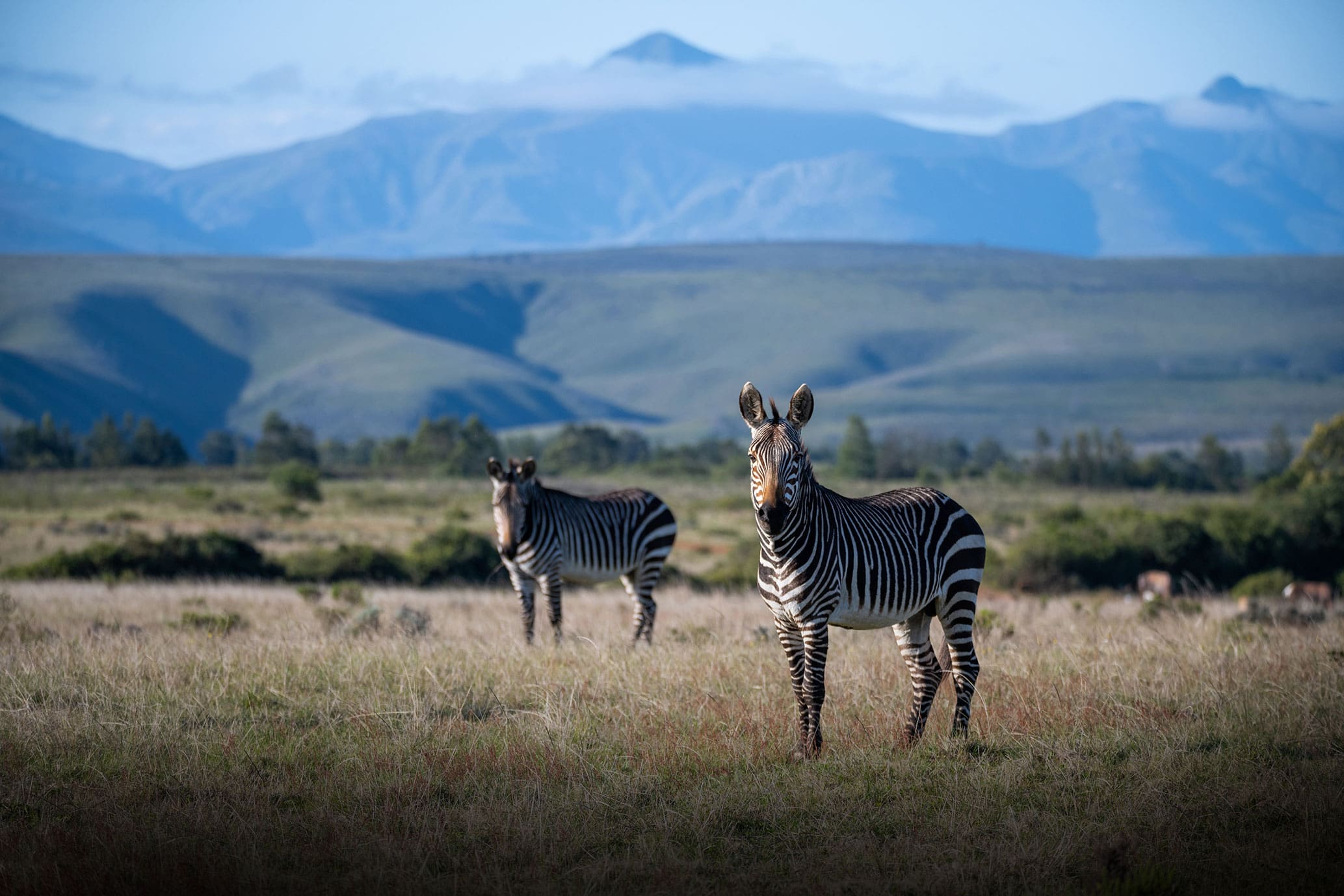
Among them is a small relict population of Cape mountain zebra found nearby. Numbering only a few dozen individuals, these zebras represent one of the last remaining reservoirs of unique genetic diversity within the species.

Their future depends not only on protection, but on connection.

Cape Mountain Zebra - Photograph by Raquel de Castro Maia
Cape mountain zebra, part of a small relict population numbering only a few dozen individuals, carrying genetic diversity found nowhere else in the species. Protection alone will not be enough. They need room to roam.Nikon Z7 | ISO-250 | f/5.3 | 1/640 sec. | 240mm
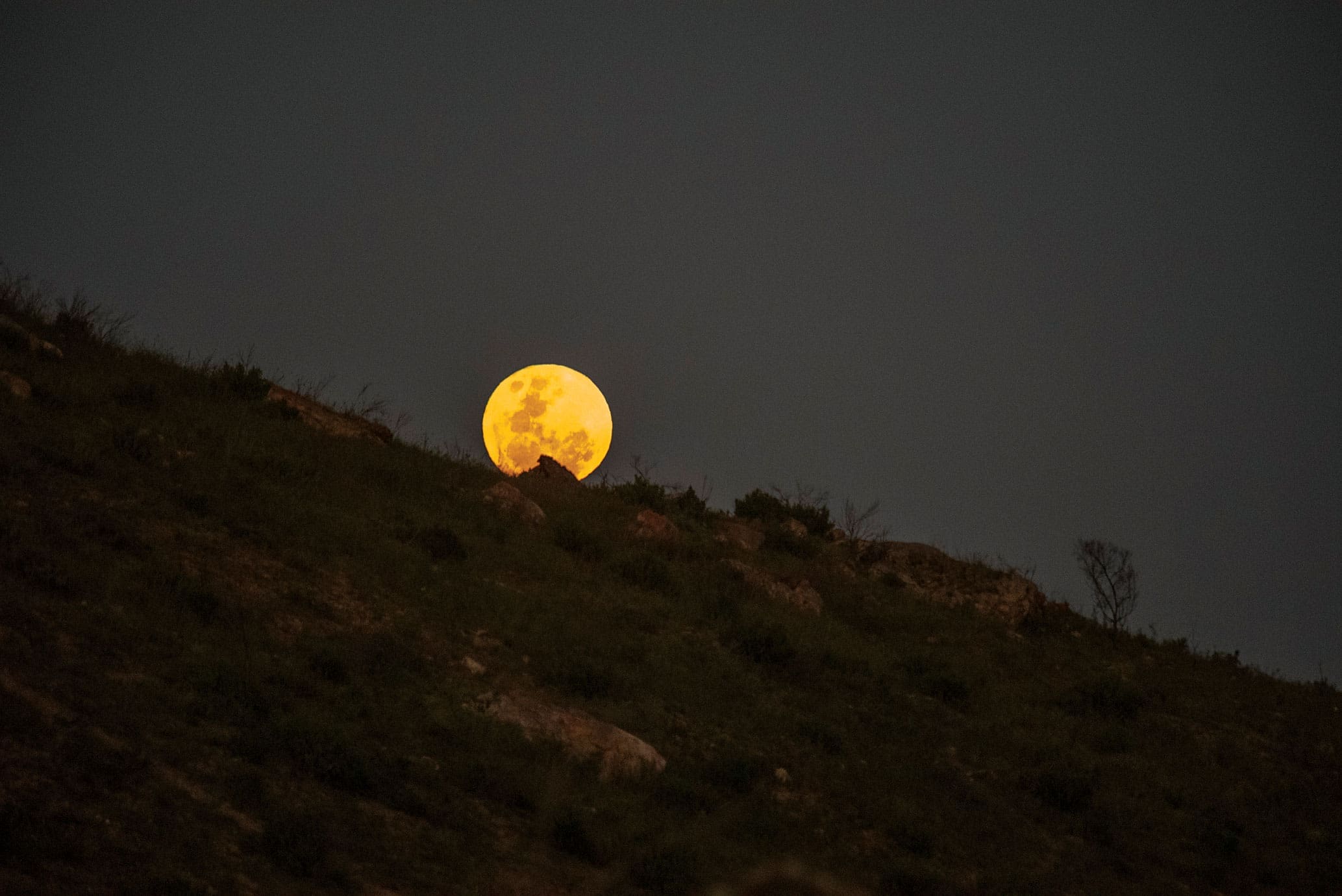
Moon rise - Photograph by Raquel de Castro Maia
The moon rises over Gondwana the same way it always has, indifferent to fences, boundaries or how many hectares have been secured. Some things were never really lost.Nikon Z7 | ISO-1280 | f/5.6 | 1/320 sec. | 400mm
Conservation is often measured in hectares secured, species monitored and management plans implemented. These metrics matter. They provide the framework through which conservation operates.

But beneath the numbers lies something less tangible.

Water flowing through restored catchments.

Pollinators moving between flowering plants.

Predators shaping ecosystems through their presence.

Seeds dispersing across valleys.

Life reconnecting with life.

The black rhino has not yet returned to this landscape. Its absence remains both a challenge and a reminder of how much work still lies ahead.


Yet every restored habitat, every protected corridor and every hectare added to the network expands the possibility of what this region can become.


The story of rewilding is often told through the return of iconic species.


Yet perhaps the greater story is this: that landscapes possess a remarkable capacity for recovery when given space, time and intention. The Southern Cape is still writing that story. Not from the beginning, but from a place of remembering.

Beneath every altered landscape lies a memory of wildness.

Rhino at dusk - Photograph by Raquel de Castro Maia
For more than an hour, these two bulls stood exactly like this, horns crossed, neither backing down and neither striking a blow. Dominance, settled quietly.Nikon Z9 | ISO-8000 | f/6.3 | 1/27 sec. | 460mm
Let Me Tell Your Story →

Behind The Story

How long has Gondwana been rewilding this landscape?

Two decades. The reserve was established in 2004 on former farmland, and has been restoring indigenous habitat and reintroducing wildlife ever since.

What is the vision behind connecting Gondwana to the wider landscape?

To reconnect protected land across the Southern Cape into a single, continuous wilderness, large enough for ecological processes like migration, pollination and genetic exchange to function at scale again.

Why does a small relict population of Cape mountain zebra matter so much?

It holds genetic diversity found nowhere else in the species. Its long-term survival depends on being reconnected to a wider landscape, not just protected in isolation.

Do you document long-term conservation projects like this one?

Yes, and I prefer to. Landscape-scale rewilding unfolds over years and decades, and that's usually where the most meaningful stories are found.

Can this work support a reserve's own conservation or fundraising communication?

Yes, get in touch with what the material needs to achieve, and I can advise on how a story like this one could be adapted.

Species fact files

Fact file

Paintbrush Lily

Haemanthus coccineus

Genus Haemanthus · Amaryllidaceae

Least Concern

Habitat
Fynbos; survives the dry summer months from a large underground bulb.

Key facts

  • An iconic geophyte that stores its energy in a large underground bulb, allowing it to survive the dry summer months.
  • Its brilliant scarlet flowers often emerge after fire, or with the first autumn rains.
  • A clear example of the adaptations that let the fynbos thrive in a landscape shaped by seasonality.