Work with me
The Botanical Heart of Gondwana
Held in a single hand, three different species of Moraea reveal the remarkable diversity of the fynbos, where closely related plants often grow side by side, each occupying its own quiet place within the landscape.Nikon Z7 | ISO-200 | f/6.3 | 1/400 sec. | 105mm
The Botanical Heart of Gondwana — secondary
Beneath the shifting mist lies a landscape of extraordinary complexity. Here, climate, soil, aspect and the density of the surrounding vegetation quietly determine what will grow, shaping the remarkable botanical diversity that defines the fynbos.Nikon Z9 | ISO-400 | f/5 | 1/640 sec. | 105mm

WILD SYSTEMS | BOTANICAL DIVERSITY | THE FLORAL KINGDOM

The Botanical Heart of Gondwana

A fifteen-year photographic journey through the remarkable botanical diversity of Gondwana.

Long before the elephants, lions and cheetahs, there were the plants.

Gondwana Private Game Reserve takes its name from Gondwanaland, the ancient supercontinent that once united Africa, South America, Antarctica, Australia, the Indian subcontinent and Madagascar. Although separated by millions of years of geological change, its name serves as a reminder that every landscape carries a story that reaches far beyond the present.

Nowhere is that story more evident than within the fynbos.

Found almost exclusively along South Africa's south-western and southern coastline, the Cape Floristic Region occupies less than 0.5% of Africa's land area, yet contains nearly 20% of the continent's plant species. It is recognised as one of the richest centres of plant diversity on Earth, with more than 9,000 plant species, around 70% of which occur nowhere else in the world.

Tritonia securigera - photograph by Raquel de Castro Maia
Tritonia securigera. Deep sandy soils provide the perfect conditions for vast numbers of dormant bulbs to survive beneath the surface. Triggered by the winter rains, they emerge together in spectacular flowering displays, illustrating the extraordinary seasonal rhythms that define the fynbos.Nikon Z7 | ISO-200 | f/3.2 | 1/3200 sec. | 105mm

The greatest stories of the fynbos are often measured in centimetres, not kilometres.

Yet this extraordinary richness is also remarkably fragile.

Centuries of agriculture, urban expansion and invasive alien plants have transformed much of this unique biome, leaving the remaining fynbos increasingly fragmented and threatened. Today, it is recognised as one of the world's most threatened biodiversity hotspots, making the protection and restoration of these landscapes more important than ever.

Satyrium muticum - Photograph by Raquel de Castro Maia
During a botanical photographic exploration of Gondwana Private Game Reserve, I found and identified the first recorded Satyrium muticum on the reserve in 2017, then listed as Critically Endangered, one of the ground orchids I've spent years studying closely. That discovery sparked further research that eventually saw the species downlisted to Endangered, a reminder of how much a single discovery can shift when it's followed by careful monitoring.Nikon D810 | ISO-400 | f/3.2 | 1/2000 sec. | 105mm

Within this remarkable ecosystem, Gondwana has become an important refuge for botanical diversity.

Today, more than 1,200 plant species have been documented across the reserve, revealing an extraordinary concentration of botanical life. Among them are more than 50 plant species threatened with extinction, making Gondwana an important sanctuary for some of South Africa's rarest flora. From towering proteas and delicate ericas to orchids, geophytes and seasonal wildflowers, every season reveals another layer of this remarkable ecosystem.

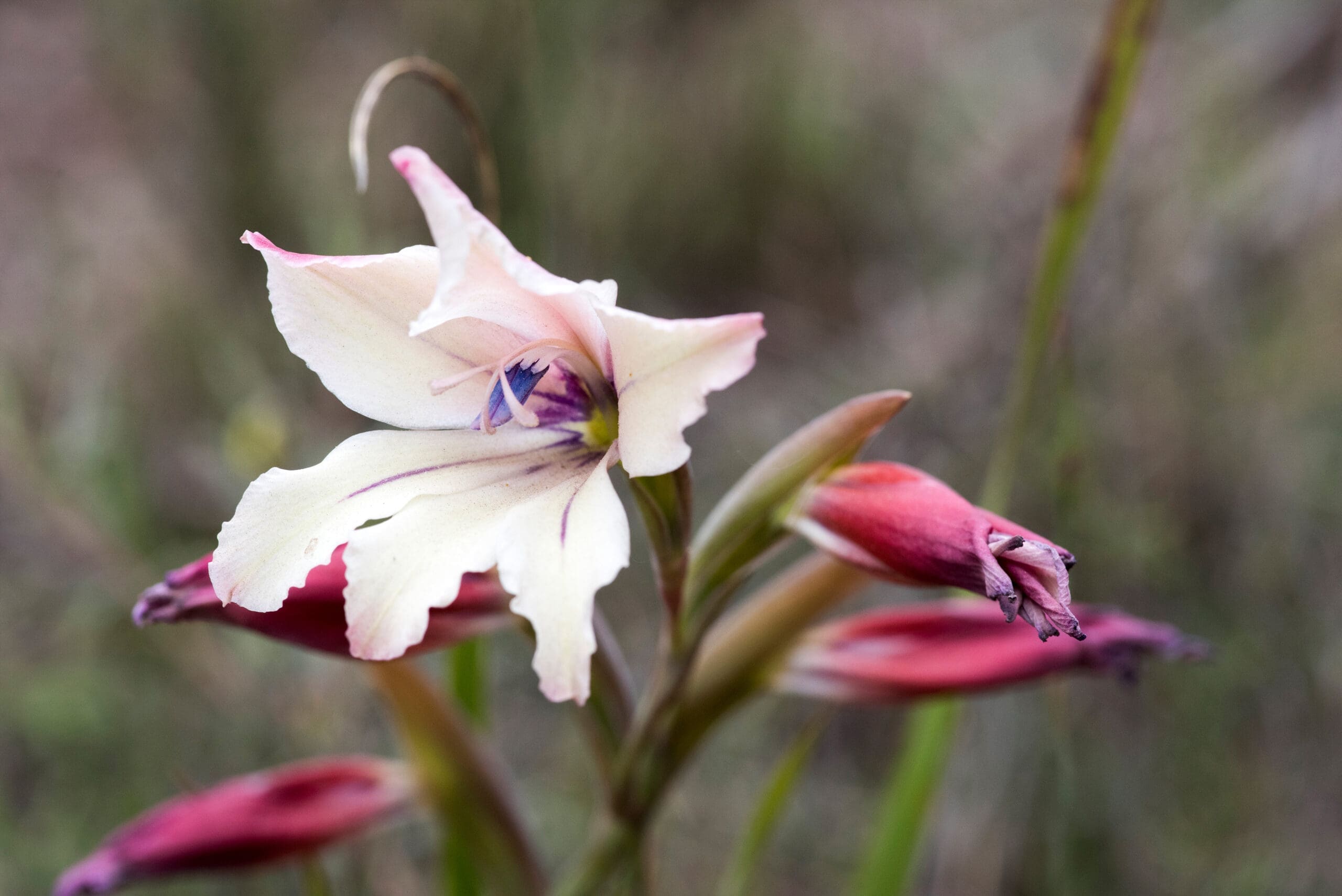
Gladiolus roseovenosus - Photograph by Raquel de Castro Maia
Gladiolus roseovenosus is one of the rarest geophytes found within Gondwana Private Game Reserve. Endemic to the southern slopes of the Outeniqua Mountains, it is classified as Critically Endangered, with fewer than 200 plants remaining in the wild. The protection and restoration of landscapes such as Gondwana provide an important refuge for species with such restricted distributions.Nikon D810 | ISO-250 | f/3.2 | 1/1250 sec. | 105mm

Every threatened plant represents far more than a single species. It is a thread within an ecosystem that countless other lives depend upon.

These remarkable plants are far more than beautiful blooms.

They provide nectar for birds, food for insects and mammals, shelter for reptiles and amphibians, and the ecological foundation upon which every other species depends. The fynbos is not simply the backdrop to the reserve's wildlife. It is the living system that sustains them all.

Over the past fifteen years, I have explored and documented this extraordinary botanical kingdom through changing seasons, droughts, fires and renewal. Some species appear for only a few weeks each year. Others remain hidden beneath the soil for decades before flowering in response to the right combination of fire, rainfall and time.

Each encounter is a reminder that some of nature's greatest treasures are also the easiest to overlook.

Cape Sugarbird - Photograph by Raquel de Castro Maia
A Cape Sugarbird perched on Protea neriifolia. Endemic to the Fynbos Biome, Cape Sugarbirds are specialist nectar feeders and important pollinators of many protea species, illustrating the intricate relationships that sustain this remarkable ecosystem.Nikon D810 | ISO-250 | f/3.2 | 1/1250 sec. | 105mm

To understand this landscape is to begin with the plants. Everything else follows.

This collection brings together a selection of those discoveries.

Rather than celebrating only the iconic blooms, it reveals the remarkable diversity that flourishes across Gondwana's landscapes, inviting a closer look at one of the world's most extraordinary floral kingdoms.

Every flower tells a story.

Together, they tell the story of Gondwana.

Let Me Tell Your Story →
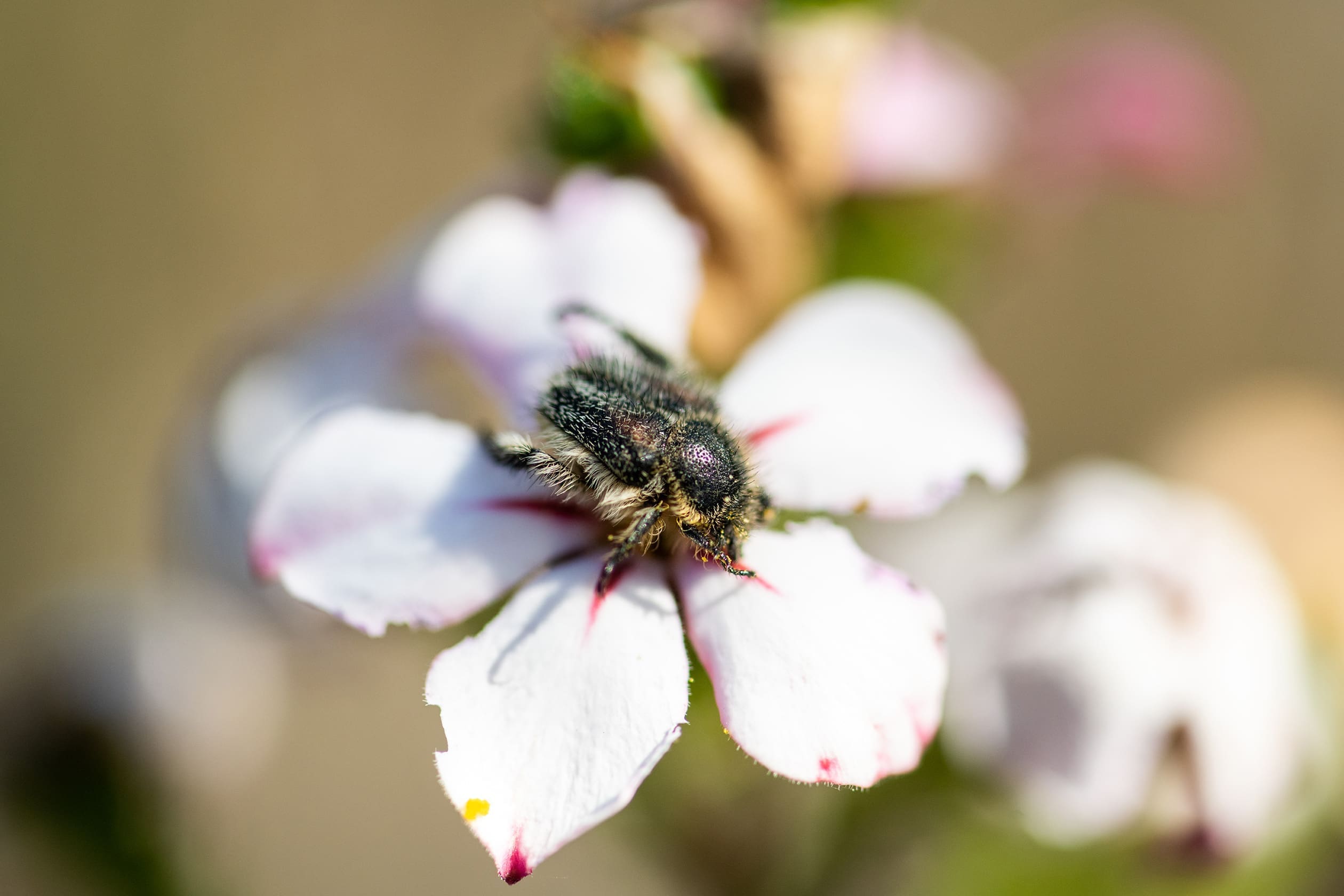
Monkey beetle - Photograph by Raquel de Castro Maia
While birds and bees often receive the attention, monkey beetles are among the fynbos' most effective pollinators. Their close relationship with flowering plants is one of the many ecological partnerships that underpin this extraordinary landscape.
Tritonia crocata - Photograph by Raquel de Castro Maia
Tritonia crocata. The translucent markings on the petals act as nectar guides, leading pollinating insects to the flower's centre. These intricate adaptations are just one example of the remarkable relationships between plants and pollinators that underpin the extraordinary biodiversity of the fynbos.
Tritoniopsis caffra - Photograph by Raquel de Castro Maia
Tritoniopsis caffra. Against the blackened earth left by fire, the flame-red flowers of Tritoniopsis caffra emerge as one of the first signs of renewal. Fire is a natural part of the fynbos cycle, stimulating flowering, germination and the regeneration of this remarkable ecosystem.
Erica - Photograph by Raquel de Castro Maia
The Cape Floristic Region is the global centre of diversity for the genus Erica, home to more than 700 species found nowhere else on Earth. This remarkable diversification of heaths is one of the defining characteristics of the fynbos and a key contributor to Gondwana's extraordinary botanical richness.
Lobostemon fruticosus - Photograph by Raquel de Castro Maia
Lobostemon fruticosus. Known in Afrikaans as agtdaegeneesbos ("eight-day healing bush"), this indigenous shrub has long been valued in traditional Cape medicine. Its name reflects the belief that it could heal a wide range of ailments within eight days, illustrating the rich ethnobotanical heritage of the fynbos.
Bartholina burmanniana, Spider orchid - Photograph by Raquel de Castro Maia
Bartholina burmanniana. Commonly known as the Spider Orchid, its intricately fringed petals are among the most distinctive of any South African orchid. Like many terrestrial orchids, it appears only under the right seasonal conditions, flowering briefly before disappearing beneath the soil once again.
Hopper - Photograph by Raquel de Castro Maia
The botanical richness of the fynbos is matched by an equally remarkable diversity of insects. Often unseen, these small inhabitants play vital roles in pollination, nutrient cycling and maintaining the ecological balance of the landscape.
Haemanthus coccineus - Photograph by Raquel de Castro Maia
Haemanthus coccineus. Commonly known as the Paintbrush Lily, this iconic geophyte stores its energy in a large underground bulb, allowing it to survive the dry summer months. Its brilliant scarlet flowers often emerge after fire or with the first autumn rains, reflecting the remarkable adaptations that enable the fynbos to thrive in a landscape shaped by seasonality.
Gladiolus virescens - Photograph by Raquel de Castro Maia
Gladiolus virescens. Endemic to South Africa, the Green Kalkoentjie is one of the many bulbous plants that flourish within the Cape Floristic Region, where an exceptional diversity of geophytes has evolved in response to fire, climate and varied soils.
Empusa pennata, Conehead Mantis - Photograph by Raquel de Castro Maia
Empusa pennata. At first glance it appears to be part of the restio itself. The Conehead Mantis has evolved to match the colour and texture of its surroundings, illustrating the extraordinary relationships between plants and insects that define the fynbos.
Brunsvigia josephinae - Photograph by Raquel de Castro Maia
Brunsvigia josephinae. One of the largest flowering bulbs in the Cape Floristic Region, it produces spectacular spherical flower heads up to 30 cm in diameter. Rich in nectar, the brilliant scarlet blooms are pollinated by sunbirds, illustrating another of the specialised relationships that underpin the remarkable biodiversity of the fynbos.
Ornithogalum dubium, Chincherinchee - Photograph by Raquel de Castro Maia
Ornithogalum dubium. Endemic to the Cape Floristic Region, the Orange/Yellow Chincherinchee spends much of the year hidden beneath the soil as a dormant bulb. With the arrival of the winter rains, it emerges in a brilliant display of golden flowers, reflecting the remarkable seasonal rhythms that shape the fynbos.
Gladiolus floribundus, Common Swordlily - Photograph by Raquel de Castro Maia
Gladiolus floribundus. Endemic to South Africa, the Common Swordlily is one of the many geophytes that emerge with the winter rains. Hidden beneath the soil for much of the year, it flowers briefly before disappearing once more, reflecting the remarkable seasonal rhythms of the fynbos.
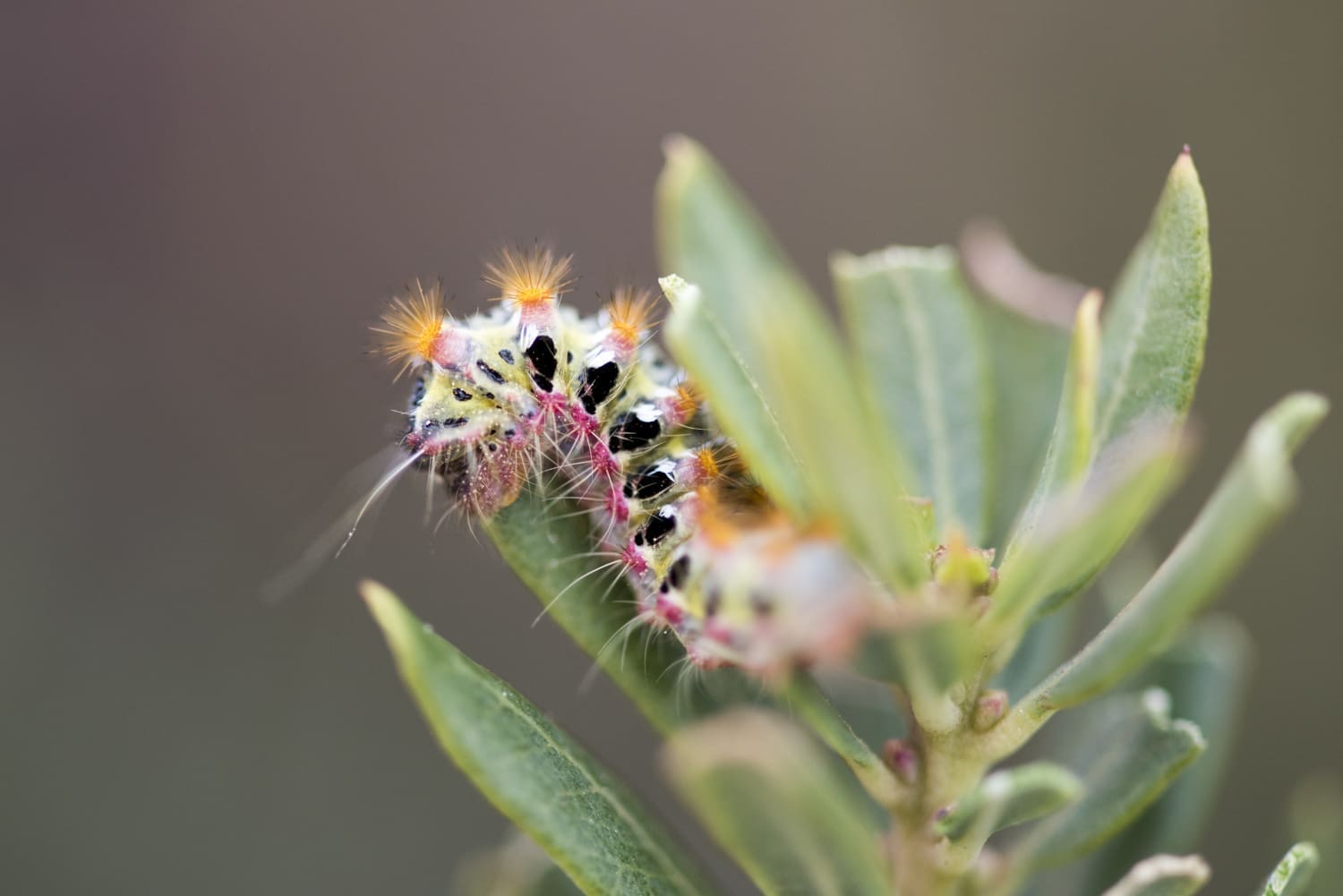
Caterpillar on fynbos - Photograph by Raquel de Castro Maia
The botanical heart of Gondwana is more than its flowers. Every leaf, insect, bird and animal is part of an intricate living system, where biodiversity is sustained through countless relationships, each as important as the next.

Ecosystem Notes

The Cape Floristic Region is one of the world's richest and most threatened biodiversity hotspots, found almost exclusively along South Africa's southern and south-western coastline. Despite occupying less than 0.5% of Africa's land area, it supports nearly 20% of the continent's plant species, with around 70% found nowhere else on Earth.

More than 1,200 plant species have been documented on Gondwana Private Game Reserve, including over 50 species threatened with extinction. These remarkable plants form the ecological foundation of the reserve, providing food, shelter and habitat for an extraordinary diversity of insects, birds, reptiles and mammals.

Protecting the fynbos is about far more than conserving rare plants. Every species forms part of an intricate web of relationships that sustains healthy ecosystems. As biodiversity declines across the globe, the future of landscapes like Gondwana becomes inseparable from our own. The health of the natural world, and ultimately our own wellbeing, depends on protecting the remarkable diversity of life that surrounds us.

Questions From the Field

Why is the Cape Floristic Region significant?

Found almost exclusively along South Africa's south-western and southern coastline, it occupies less than 0.5% of Africa's land area yet contains nearly 20% of its plant species.

Where does the name Gondwana come from?

From Gondwanaland, the ancient supercontinent that once united Africa, South America, Antarctica, Australia, the Indian subcontinent and Madagascar, a reminder that every landscape carries a story reaching well beyond the present.

How long has this botanical work been running?

It is a fifteen-year photographic journey through the reserve's botanical diversity.

Do you photograph plants and habitat as well as wildlife?

Yes, and I often find they are the more important half of the story. The habitat is what the animals are shaped by.

Can botanical work be commissioned for a reserve or estate?

Yes. I find it suits reserves wanting to show what they protect beyond the obvious species. Get in touch to talk it through.

Can images from this story be licensed?

Yes. This usually means editorial use (a magazine or article), campaign use (marketing or advertising), or conservation-communication use (a conservation organisation's own reports or outreach material). Tell me what you need and where it will run.

Has this project documented any significant discoveries?

Yes. I found and identified the first recorded Satyrium muticum on the reserve in 2017, a discovery that has since seen the species downlisted from Critically Endangered to Endangered, a rare example of careful monitoring changing a species' outlook.

Species fact files

Fact file

Cape Sugarbird

Promerops cafer

Genus Promerops · Promeropidae

Least Concern

Habitat
Endemic to the Fynbos Biome.

Key facts

  • Endemic to the Fynbos Biome.
  • A specialist nectar feeder and an important pollinator of many protea species.
  • Photographed perched on Protea neriifolia — one of the intricate relationships that sustain this ecosystem.

Fact file

Spider Orchid

Bartholina burmanniana

Genus Bartholina · Orchidaceae

Least Concern

Key facts

  • Its intricately fringed petals are among the most distinctive of any South African orchid.
  • Like many terrestrial orchids it appears only under the right seasonal conditions, flowering briefly before disappearing beneath the soil again.
  • Recorded on Gondwana Private Game Reserve, part of the reserve's ongoing botanical survey work.

Fact file

Brunsvigia josephinae

Brunsvigia josephinae

Genus Brunsvigia · Amaryllidaceae

Vulnerable

Habitat
Cape Floristic Region.

Key facts

  • One of the largest flowering bulbs in the Cape Floristic Region, producing spherical flower heads up to 30 cm in diameter.
  • The brilliant scarlet blooms are rich in nectar and pollinated by sunbirds.
  • An example of the specialised plant-and-pollinator relationships that underpin fynbos biodiversity.

Fact file

Conehead Mantis

Empusa pennata

Genus Empusa · Empusidae

Habitat
Fynbos vegetation, among restios.

Key facts

  • At first glance it appears to be part of the restio it sits on.
  • It has evolved to match the colour and texture of its surroundings — one of the clearest illustrations of plant-and-insect relationships in the fynbos.
  • Photographed on Gondwana Private Game Reserve.

Fact file

Common Swordlily

Gladiolus floribundus

Genus Gladiolus · Iridaceae

Least Concern

Habitat
Endemic to South Africa.

Key facts

  • One of the many geophytes that emerge with the winter rains.
  • Hidden beneath the soil for much of the year, it flowers briefly before disappearing once more.
  • Its seasonal rhythm is characteristic of the fynbos, where dormancy is a survival strategy rather than an absence.

Fact file

Gladiolus roseovenosus

Gladiolus roseovenosus

Genus Gladiolus · Iridaceae

Critically Endangered

Habitat
Endemic to the southern slopes of the Outeniqua Mountains.

Key facts

  • One of the rarest geophytes found within Gondwana Private Game Reserve.
  • Classified as Critically Endangered, with fewer than 200 plants remaining in the wild.
  • Protected landscapes such as Gondwana provide an important refuge for species with such restricted distributions.

Fact file

Green Kalkoentjie

Gladiolus virescens

Genus Gladiolus · Iridaceae

Least Concern

Habitat
Endemic to South Africa, within the Cape Floristic Region.

Key facts

  • One of the many bulbous plants that flourish within the Cape Floristic Region.
  • The region's exceptional diversity of geophytes has evolved in response to fire, climate and varied soils.
  • Endemic to South Africa.

Fact file

Paintbrush Lily

Haemanthus coccineus

Genus Haemanthus · Amaryllidaceae

Least Concern

Habitat
Fynbos; survives the dry summer months from a large underground bulb.

Key facts

  • An iconic geophyte that stores its energy in a large underground bulb, allowing it to survive the dry summer months.
  • Its brilliant scarlet flowers often emerge after fire, or with the first autumn rains.
  • A clear example of the adaptations that let the fynbos thrive in a landscape shaped by seasonality.

Fact file

Agtdaegeneesbos

Lobostemon fruticosus

Genus Lobostemon · Boraginaceae

Least Concern

Habitat
Fynbos.

Key facts

  • Known in Afrikaans as agtdaegeneesbos — the "eight-day healing bush".
  • An indigenous shrub long valued in traditional Cape medicine; its name reflects the belief that it could heal a wide range of ailments within eight days.
  • One of the clearest illustrations of the ethnobotanical heritage carried by the fynbos.

Fact file

Orange Chincherinchee

Ornithogalum dubium

Genus Ornithogalum · Asparagaceae

Least Concern

Habitat
Endemic to the Cape Floristic Region.

Key facts

  • Spends much of the year hidden beneath the soil as a dormant bulb.
  • With the arrival of the winter rains it emerges in a brilliant display of golden flowers.
  • Endemic to the Cape Floristic Region.

Fact file

Oleanderleaf Protea

Protea neriifolia

Genus Protea · Proteaceae

Least Concern

Habitat
Fynbos Biome.

Key facts

  • A protea of the Fynbos Biome, photographed on Gondwana Private Game Reserve.
  • Cape Sugarbirds are specialist nectar feeders on proteas and important pollinators of many protea species.
  • The relationship between protea and sugarbird is one of the intricate partnerships that sustain the fynbos.

Fact file

Tritonia crocata

Tritonia crocata

Genus Tritonia · Iridaceae

Least Concern

Habitat
Fynbos.

Key facts

  • The translucent markings on the petals act as nectar guides, leading pollinating insects to the flower's centre.
  • These adaptations are one example of the relationships between plants and pollinators that underpin fynbos biodiversity.

Fact file

Tritonia securigera

Tritonia securigera

Genus Tritonia · Iridaceae

Least Concern

Habitat
Deep sandy soils of the fynbos.

Key facts

  • Deep sandy soils allow vast numbers of dormant bulbs to survive beneath the surface.
  • Triggered by the winter rains, they emerge together in spectacular flowering displays.
  • One of the clearest illustrations of the seasonal rhythms that define the fynbos.

Fact file

Tritoniopsis caffra

Tritoniopsis caffra

Genus Tritoniopsis · Iridaceae

Least Concern

Habitat
Fynbos; among the first species to flower after fire.

Key facts

  • Against the blackened earth left by fire, its flame-red flowers emerge as one of the first signs of renewal.
  • Fire is a natural part of the fynbos cycle, stimulating flowering, germination and regeneration.
  • A species that makes the role of fire in this ecosystem visible.

Place

Gondwana Private Game Reserve

Type
Private game reserve (rewilded fynbos)
Region
Garden Route, near Mossel Bay, Western Cape

A rewilded former-farmland reserve in the Cape Floral Kingdom, restoring endangered fynbos and renosterveld habitats, and the wildlife that lived there before European settlement, alongside an active conservation foundation.

Key facts

  • ≈11,000 hectares on South Africa's southernmost coast, developed expressly to rewild the region
  • Free-roaming Big 5, including the world's southernmost free-roaming elephant herd, the first elephants re-established in a fynbos / renosterveld landscape
  • Over 1,000 fynbos plant species; a ~1,000-ha protected block for specialist species (bontebok, Cape mountain zebra, sable)
  • Site of the rediscovery of the Critically Endangered orchid Satyrium muticum, first found on 13 September 2017 by Raquel de Castro Maia; now the largest known population (6,000+ plants by 2020)
  • Endangered species present include Cape mountain zebra, bontebok, serval and brown hyena

Fact file

Sticky Satyr Orchid

Satyrium muticum

Genus Satyrium · Orchidaceae

Endangered

Habitat
Dry to moist lower slopes (up to ~200 m) in fynbos and renosterveld of the Western Cape; only four small, fragmented subpopulations are known
Lifespan
Terrestrial perennial orchid, growing from a tuber

Key facts

  • A range-restricted South African terrestrial orchid, very rare: roughly 2,500 mature individuals remain, with the largest single subpopulation under 200 plants.
  • Unusually for the genus, it lacks the paired nectar spurs typical of most Satyrium species; it is pollinated by monkey beetles that carry its pollen packets on their backs.
  • Threatened by urban expansion, agriculture and forestry, with ongoing habitat loss recorded at three of its four known sites.
  • SANBI Red List: Endangered (assessed 2018), under criteria B1ab(iii,v)+2ab(iii,v); C2a(ii).
RangeWestern Cape, South Africa (highly localised)